
Navigating Sensory Processing: Attending Our First Sensory Workshop
A few weeks ago, we attended a sensory processing workshop through the NHS which was a first for us, but something that already feels like an essential part of our journey as a family. Since our daughter turned three, her sensory differences have become more apparent, though looking back, I can pinpoint signs from her earliest days. As someone who also experiences sensory processing differences myself, this workshop wasn’t just about supporting her, it was about deepening my own understanding of our shared experience and some of the content resonated with me deeply.
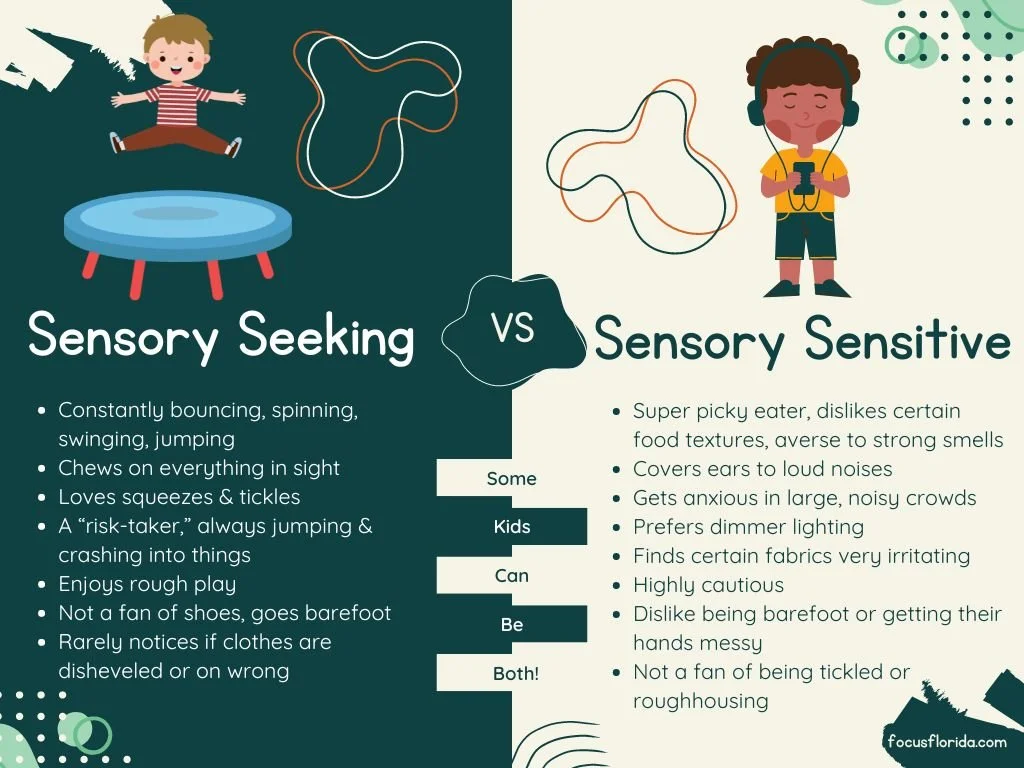
Source… Focus Florida
Sensory Processing: More Than Just Quirks
Sensory processing differences like most neurodivergent traits are often misunderstood. It’s not just about disliking loud noises or being fussy with clothing, it’s how the brain interprets and responds to sensory input, from textures and sounds to movement and even internal body signals. For my daughter, this has looked like:
• A strong preference for certain fabrics and refusal of others. Including clothing, underwear, socks, hats and bedding.
• Struggling with unexpected noises like the hair dryer but actively seeking deep pressure and constant movement.
• Fluctuating between high energy bursts and moments of sensory overwhelm.
• Selective eating and preferences for a particular variety of ‘safe foods’
The more I’ve learned, the more I see reflections of my own experiences growing up, things I masked or didn’t have the language for at the time.
What We Learned
Although I went into the workshop with a fairly strong understanding of Sensory Processing. It covered so much ground, from sensory-seeking vs. sensory-avoiding behaviours (which we see both of in our daughter) to practical strategies for regulation. Some key points to take away were:
• The importance of movement: For some children, movement isn’t just play; it’s essential regulation. Activities like spinning, swinging, bouncing and deep-pressure play can help balance their sensory needs. Spinning was a favourite of mine as a child and has been for our daughter since she learned to walk.
• Why “behaviour” is often communication: Meltdowns and shutdowns aren’t about being “difficult.” They’re often a sign of sensory overload or unmet sensory needs.
• Creating sensory-friendly environments: Small changes, like dim lighting, noise-cancelling headphones (if tolerated), or textured fidget toys, can make a big difference in daily life.
Reflections & Next Steps
This workshop reinforced what I already felt in my gut, our daughter doesn’t need to be “fixed” or forced to fit into a neurotypical mould. She needs understanding, support and environments that honour how she processes the world.
We’re now looking at ways to better meet her sensory needs, from more movement breaks, particularly when the wild winds keep us indoors, to adjusting our home setup - for which we are lucky to be receiving one to one occupational therapy support for. This process has been just as much about unlearning and relearning my own sensory experiences, things I brushed off as “just me being too sensitive” now make perfect sense to me.
It’s a journey, but one I’m grateful to be on with her.
If this resonates with you, I’d love for you to follow along, share with a friend, or leave a comment, I’m always up for a good chat about sensory experiences! Who else here relates to sensory overwhelm, or has found small ways to make life more sensory-friendly? 💬
Til Next Time | Lesley-Anne
