
Sleepless in the Hebrides: What Helps (and What Doesn’t) When Sleep Is a Struggle…
Sleep. That mythical, elusive thing we all need but never seem to get enough of… especially in a neurodivergent household.
Our wee one has always had a complicated relationship with sleep, and honestly, so have I. Bedtime routines have never really worked for us,although we constantly try and I think she was almost three before she technically slept through the night for the first time. Even now, sleep comes in waves and even when she does sleep, I don’t. The exhaustion is real.
One thing that has consistently helped, though, is co-sleeping. I know it’s not for everyone, but for us, it has been an anchor in the chaos of sleepless nights. Breastfeeding naturally led us to co-sleep when she was a baby and we’re more than happy to share a bed.
There are actually some well-documented benefits to co-sleeping, particularly for neurodivergent children:

• Regulation & Security: Many neurodivergent children struggle with self-regulation, and having a parent close by can help stabilise their nervous system. Co-sleeping can reduce nighttime anxiety, sensory overload, and even help regulate breathing and heart rate.
• Better Sleep Quality: While some might assume co-sleeping leads to more wake-ups, research suggests that for many families, it actually improves overall sleep quality. Less night waking, quicker resettling, and fewer battles at bedtime.
• Sensory Comfort: Many neurodivergent kids are highly sensitive to textures, sounds, and changes in temperature. Sleeping close to a trusted caregiver can provide deep pressure input (which is naturally calming) and reduce sensory stress
• Easier Night Feeds & Comforting: In the early years, co-sleeping made breastfeeding through the night so much easier. Even now, it means that when she stirs in the night, a reassuring touch or whispered comfort is all she needs to settle again.
For us, co-sleeping has been a constant source of comfort. It’s not a failure, a bad habit, or something we feel we have to change… it just works for us and while she might not always need us this close - for now, we’re happy to embrace it.
What Else Helps (Even Just a Little)
After years of trial and error (and a whole lot of late-night Googling), here are some things that have helped… if only a little:
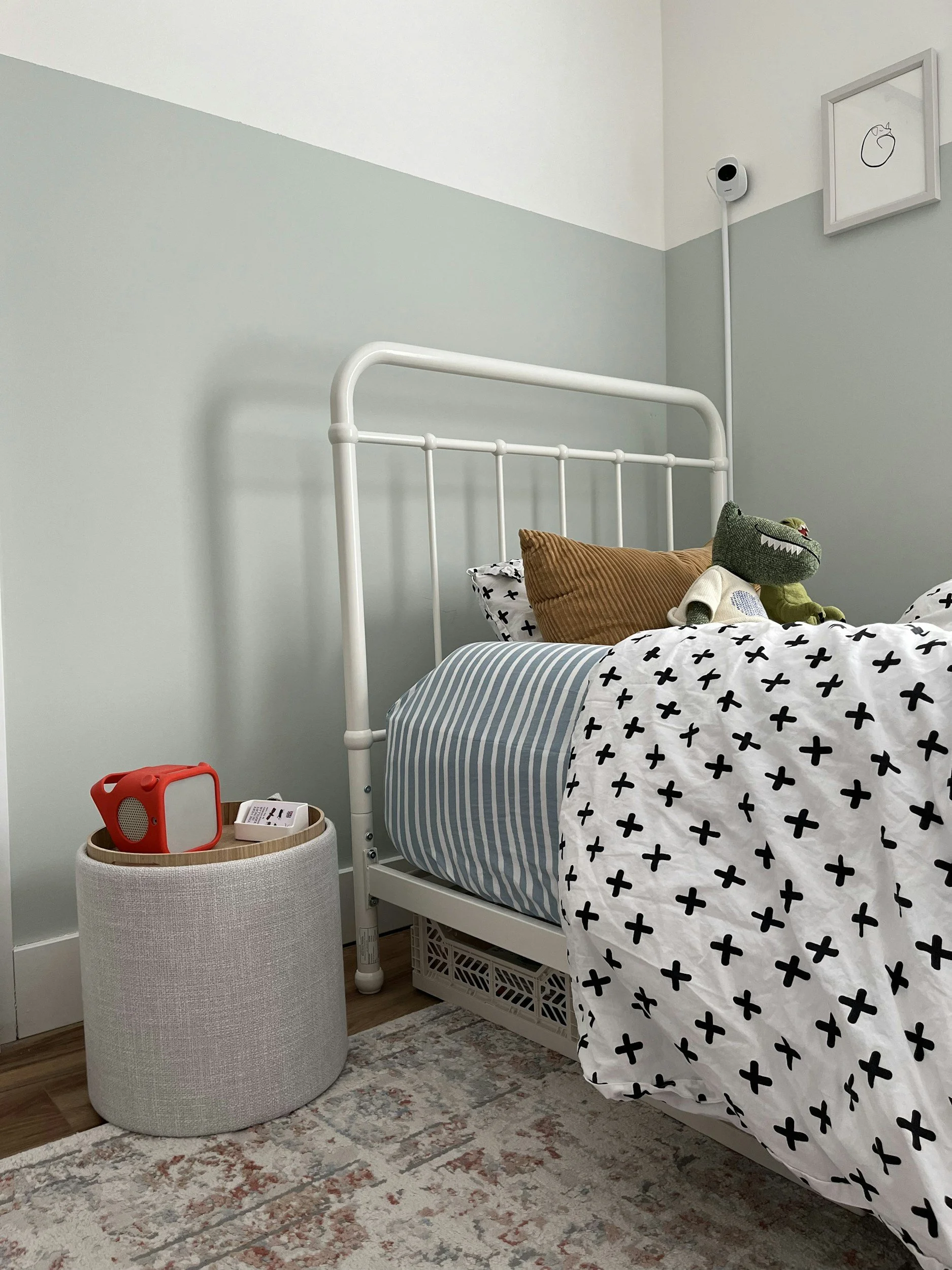
Sensory-Friendly Sleep Space
Neurodivergent brains pick up everything… every creaky floorboard, flickering shadow, and change in room temperature. My mum used to say I could hear a pin drop as a child, and even now, I can hear the hum of electricity… a sound that became almost unbearable last year when I had severe tinnitus. Minimising sensory input can make a huge difference. Blackout blinds, a Yoto player for sleep sounds/nightlight, and weighted blankets have all helped, along with 100% brushed cotton bedding and 100% cotton pyjamas to accommodate tactile sensory differences. Together, these small changes have created a calmer, more comfortable sleep environment for us.
2. Body Before Brain
Sleep isn’t just a mental process; it’s a physical one. If the body isn’t ready to rest, the brain won’t be either. Some things that help:
• Deep pressure input before bed: bear hugs, squishing under a big duvet, or gentle joint compressions.
• A warm bath: to regulate body temperature…. we also like adding Epsom salts for an extra kick of magnesium absorption.
• Proprioceptive-heavy activities earlier in the evening: climbing, spinning, jumping, or yoga (Cosmic Kids Yoga on YouTube is a favourite) to help with body awareness and relaxation.
• Outdoor play (weather permitting): fresh air, movement, and sensory-rich experiences (especially a run around the beach) during the daytime can really support better sleep at night.
• Reducing screen time in the evenings: blue light from screens can be overstimulating, so we try to wind down with books, audiobooks, or quiet play instead.
3. Let Go of the ‘Perfect’ Bedtime
For a long time, I thought we just needed to nail the routine…. the exact right order of books, cuddles, and lights-out at a precise time. But neurodivergent sleep doesn’t always work that way. Some nights, we do an hour of quiet play before she’s actually tired, and forcing a predetermined bedtime just leads to stress (for everyone). We’ve learned very early into parenthood to be more flexible and tune into what actually helps her wind down, instead of what should work.
4. Low-Energy Nighttime Activities
If sleep isn’t happening, frustration won’t help (even though, trust me, I feel it). Instead of battling wakefulness… which we’ve tried and failed at many times, we now opt for quiet, low-energy activities:
• Soft audiobooks or sleep stories (Yoto Player and the Calm app have great ones).
• Dim lighting and a sensory toy (a squishy mallow, weighted sloth or fidget is a favourite)
• Gentle back rubs or pressure input to help settle her body.
5. Look After Yourself Too
This one is hard when you’re running on fumes, and even though I’m terrible at it too, it matters. When you’re utterly exhausted, the nights feel longer, the challenges feel bigger, and everything just feels harder. On particularly rough nights, I remind myself that this won’t last forever (even if it feels like it will). I grab tiny moments of rest where I can… maybe have a nap when my partner is home or a few deep breaths with a cup of tea before we settle her again. Small wins.
Some nights are still chaos, and that’s okay. Sleep (or the lack of it) is a season, just like everything else in parenting. For now, we adapt, we try, and we find the little things that make it just a bit easier.
If you have any sleep tips or relatable middle-of-the-night survival strategies, I’d love to hear them…. because solidarity in sleep deprivation is everything!
Til Next Time | Lesley-Anne
